- English
- Español
- Português
- русский
- Français
- 日本語
- Deutsch
- tiếng Việt
- Italiano
- Nederlands
- ภาษาไทย
- Polski
- 한국어
- Svenska
- magyar
- Malay
- বাংলা ভাষার
- Dansk
- Suomi
- हिन्दी
- Pilipino
- Türkçe
- Gaeilge
- العربية
- Indonesia
- Norsk
- تمل
- český
- ελληνικά
- український
- Javanese
- فارسی
- தமிழ்
- తెలుగు
- नेपाली
- Burmese
- български
- ລາວ
- Latine
- Қазақша
- Euskal
- Azərbaycan
- Slovenský jazyk
- Македонски
- Lietuvos
- Eesti Keel
- Română
- Slovenski

Why Is a Dental Surgery Screwdriver Transforming Precision in Implant Procedures?
A Dental Surgery Screwdriver is a specialized instrument designed for the placement, tightening, and removal of screws used in dental implantology, restorative procedures, and oral surgery. Its primary function is to deliver stable torque, accurate angulation, and ergonomic control, ensuring that implant components are secured with precision. In a field where millimeters determine success or failure, a high-performance screwdriver becomes indispensable.
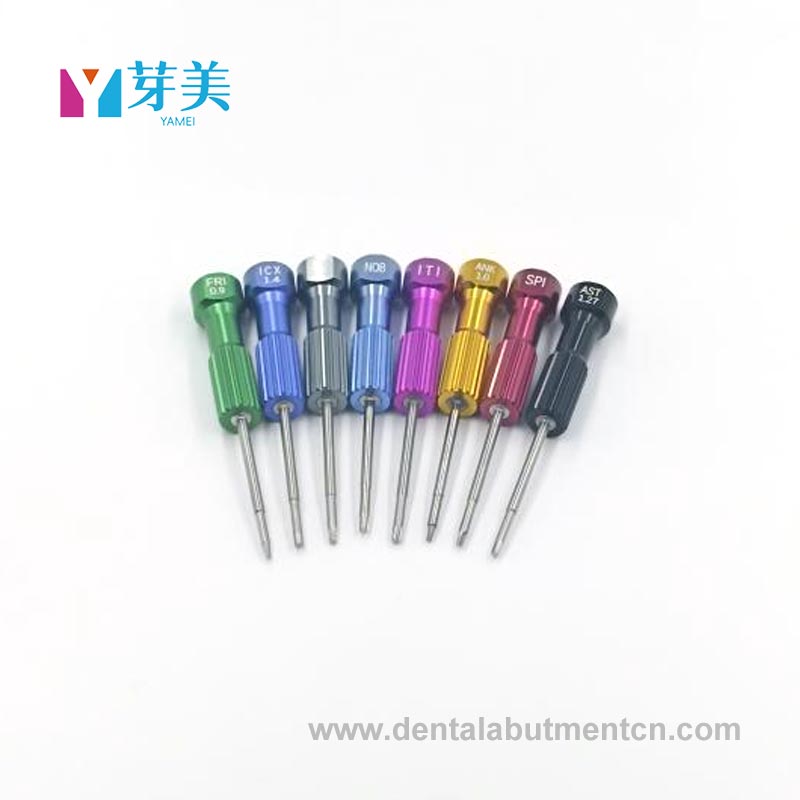
Below is a technical parameter summary for professional reference.
Dental Surgery Screwdriver — Technical Parameters
| Parameter | Specification |
|---|---|
| Material | Medical-grade stainless steel / Titanium alloy |
| Handle Design | Anti-slip ergonomic grip with rotational stability |
| Torque Compatibility | 15–50 Ncm depending on model |
| Bit Types | Hex, Torx, Cross, Custom implant-system-specific |
| Bit Length Options | 20 mm / 28 mm / 32 mm / 40 mm / 45 mm |
| Surface Treatment | Passivation, polishing, corrosion-resistant coating |
| Sterilization Compatibility | Autoclave-safe up to 134°C |
| Application | Implant screws, abutment screws, healing caps, fixation screws |
| Connection | Universal fit or brand-specific options |
What Features Make a Dental Surgery Screwdriver Critical for Implant Success?
A modern implant workflow requires tools that optimize speed, stability, and accuracy. The Dental Surgery Screwdriver contributes to clinical success in several fundamental ways:
1. Precision Fit With Implant Components
A screwdriver with a highly accurate bit prevents rounding or damage to tiny implant screws. A micro-machined tip ensures:
-
A secure interface with implant screw heads
-
Reduced slippage during torque application
-
Preservation of implant integrity inside the patient
2. Ergonomic Support for Surgeon Efficiency
The grip must remain stable during long procedures. Thus:
-
Anti-slip textures enhance hold
-
Balanced weight distribution minimizes hand fatigue
-
Smooth rotational design ensures controlled turning
3. Sterile and Safe Surgical Performance
The materials and surface finishing protect both patient and clinician:
-
Stainless steel maintains structural hardness
-
Passivation enhances corrosion resistance
-
High-temperature resistance ensures autoclave safety
4. Compatibility With Major Implant Systems
Providing universal and system-specific bit designs allows surgeons to switch tools seamlessly across brands, reducing procedural delays.
Why Does Precision Torque Application Matter in Dental Implantology?
Improper torque is one of the main contributors to implant failures. Understanding why torque matters illuminates the value of a well-engineered dental surgery screwdriver.
1. Preventing Over-Tightening
Excess force can:
-
Strip the screw head
-
Damage the internal implant geometry
-
Cause long-term instability
A calibrated screwdriver ensures that torque is delivered within recommended ranges.
2. Preventing Under-Tightening
Too little force may cause:
-
Micro-movement
-
Loosening of the abutment screw
-
Implant restoration failure
Reliable torque delivery protects the biological seal around implants and maintains the stability of prosthetics.
3. Supporting Osseointegration
A properly torqued implant component enhances healing by minimizing mechanical disturbances during the bone integration phase.
How Does a Dental Surgery Screwdriver Improve Daily Surgical Workflow?
Optimized tools lead to faster procedures, better patient outcomes, and safer clinical environments.
1. Faster Screw Engagement During Surgery
A well-machined bit engages implant screws instantly, reducing operative time and minimizing patient discomfort.
2. Enhanced Visibility and Access
Available in multiple lengths, these screwdrivers enhance operability in:
-
Narrow oral cavities
-
Posterior regions
-
Deep implant sites
3. Reduced Risk of Accidental Dropping
Anti-slip handles and magnetized or friction-fit bits keep screws firmly attached even during angled insertions.
4. Consistent Sterilization Durability
High-grade materials withstand repeated autoclave cycles without corrosion, ensuring long-term clinical reliability.
Key Advantages of Choosing a High-Quality Dental Surgery Screwdriver
1. Superior Mechanical Strength
With titanium alloy or stainless-steel construction, the screwdriver resists bending, fracture, and wear.
2. Extended Clinical Lifespan
Advanced surface treatments reduce oxidation and maintain structural integrity over years of usage.
3. Minimally Invasive Assistance
A slim shaft design improves access to deep surgical zones, supporting minimally invasive implant techniques.
4. Cost Efficiency
A durable, multi-purpose screwdriver reduces the need for frequent replacements and supports a better return on investment for clinics.
5. Better Patient Experience
Reduced surgical time, improved torque accuracy, and minimized procedural complications translate into smoother recoveries.
What Future Trends Will Shape the Evolution of Dental Surgery Screwdrivers?
Dental technology continues to evolve rapidly, and screwdriver designs are adapting accordingly.
1. Integration With Digital Implant Planning Systems
Future tools may incorporate:
-
Torque tracking sensors
-
Smart handles that record tightening data
-
Bluetooth-enabled torque monitoring
2. Advanced Materials
Research continues into:
-
High-density polymer handles
-
Nano-coated metal shafts
-
Ultra-light titanium variants
3. Universal Multi-Fit Screwdrivers
To reduce inventory complexity, future models may offer adaptive tips compatible with a wider range of implant systems.
4. Modular and Interchangeable Designs
Growing interest in customizable systems encourages the development of:
-
Detachable handles
-
Replaceable bits
-
Magnetic locking systems
5. Precision Robotics Compatibility
As robotic dental implant surgery expands, screwdrivers may be designed to work with:
-
Robotic arms
-
Guided surgery platforms
-
Automated torque delivery systems
Common Questions About Dental Surgery Screwdrivers (FAQ)
Q1: How often should a Dental Surgery Screwdriver be replaced?
A: The replacement frequency depends on usage intensity and sterilization cycles. Clinicians typically replace the bit or entire screwdriver when signs of wear, rounding, or decreased engagement appear. High-quality stainless steel or titanium models can endure hundreds of autoclave cycles without functional deterioration, making them long-lasting tools in routine implant practice.
Q2: What is the difference between a torque screwdriver and a manual dental screwdriver?
A: A torque screwdriver applies controlled and measurable force, ensuring screws are tightened to manufacturer-recommended levels, which is crucial for implant stability. A manual screwdriver provides rotational force without torque calibration, making it suitable for fine adjustments, initial placement, or screw removal. Both tools complement each other in implant workflows, with torque drivers typically used for final tightening.
Conclusion: The Strategic Value of a High-Performance Dental Surgery Screwdriver
A Dental Surgery Screwdriver is more than a simple hand tool; it is a critical component in delivering predictable, safe, and efficient implant outcomes. Its design—ranging from bit precision to ergonomic structure and torque compatibility—directly influences surgical success. With the dental implant market expanding globally, demand continues to rise for tools that combine reliability, adaptability, and clinical precision.
Manufacturers that emphasize high-grade materials, multi-system compatibility, and long-term sterilization resistance will lead the next generation of surgical instrumentation. As one of the notable contributors to this field, Shenzhen Yamei Medical Technology Co., Ltd. provides advanced solutions designed to support surgeons in achieving outstanding procedural results. For professional consultation, detailed specifications, or purchasing inquiries, contact us to learn more and obtain expert guidance tailored to your clinical needs.